How-to — 6 min read
Small business trends to watch in 2026
The start of the year is always a vital time for small businesses. It brings opportunities to fine-tune your strategy,…

While there are tons of integrations and features that streamline your scheduling, reduce no-shows, and enhance your connection with customers, one feature may fly under the radar: your booking policy.
You can use it to provide customers with the necessary details before confirming an appointment—helping to set their expectations, reducing back-and-forth emails, and keeping things running efficiently. Pair it with your terms and conditions, and you’ve got clarity covered from discovery to booking.
Here’s how to set up both, plus practical ways your business can use them to guide visitors and protect your time.
Display your booking policy directly on your Booking Page — letting customers see key details before they schedule an appointment.

That’s it. Your policy is now front and center, visible on desktop, tablet, and mobile. For illustrated steps, check out our support article.
If customers need to formally acknowledge your terms before booking, add a required checkbox to your terms and conditions during the booking flow.
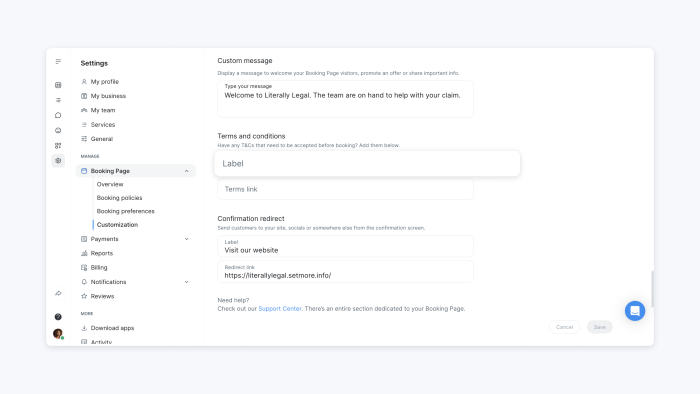
When customers book, they’ll see a checkbox they must accept before confirming their appointment. For illustrated steps, check out our support article.
That’s entirely up to you. But a good booking policy should answer questions customers may have before they’re asked. Let’s run through the most common (and helpful) ways to use it.
No-shows are a no-go with Setmore. Email and SMS confirmations and reminders try to mitigate them as much as possible. However, to help avoid more last-minute surprises, clearly outline how changes are handled.
Let customers know:
If prepayment or deposits are required, this is also the right place to explain refund rules—so expectations are clear before money changes hands.
If a service requires:
Spell it out in your booking policy. Customers are more likely to follow through when they know exactly what to expect.
Things come up, plans change, and running behind happens (to everyone!)—but clarity before booking helps everyone know what to expect.
Your booking policy can explain:
It’s not harsh; you can’t be expected to wait around when there are more customers to serve. It sets boundaries, protects your time, has clear expectations, and keeps the day moving.
Some services need prep work—for you or your customers. A booking policy is ideal for sharing what’s expected and what’s required.
Specific details may include:
This way, customers are prepared, appointments begin on time — it’s a stress-free zone where everyone feels relaxed.
If services take place at a customer’s location, a booking policy lets them know what to expect and how to prepare.
For example:
This keeps your focus on the work—not logistics.
Think of your booking policy as a guide and set of expectations for your customers. On the other hand, terms and conditions are ideal for legal or contractual requirements — particularly when acknowledgment is required before booking.
Terms and conditions can cover:
This adds a layer of consent and protection – by agreeing, your customers understand what their rights are and yours.
Your Booking Page is more than just services and availability — brand it to showcase your personality, add reviews to show what others think, and display your booking policy to set the tone for the entire experience.
With a clear Booking policy and well-placed terms and conditions, customers know what to expect, bookings stay on track, and fewer questions land in your inbox.
Already have a Booking Page? Take a few minutes to customize it and make it yours. Want to sign up? Every Setmore account includes a free Booking Page you can customize to fit your business—policies included.

by Setmore Appointments
Free, powerful online customer scheduling for businesses of all sizes.


The start of the year is always a vital time for small businesses. It brings opportunities to fine-tune your strategy,…

Patience may be a virtue, but waiting has become more than an inconvenience—it’s a liability. For a new breed of…

Many small service-based businesses start with one goal: to help people. But over time, the behind-the-scenes demands start to stack…